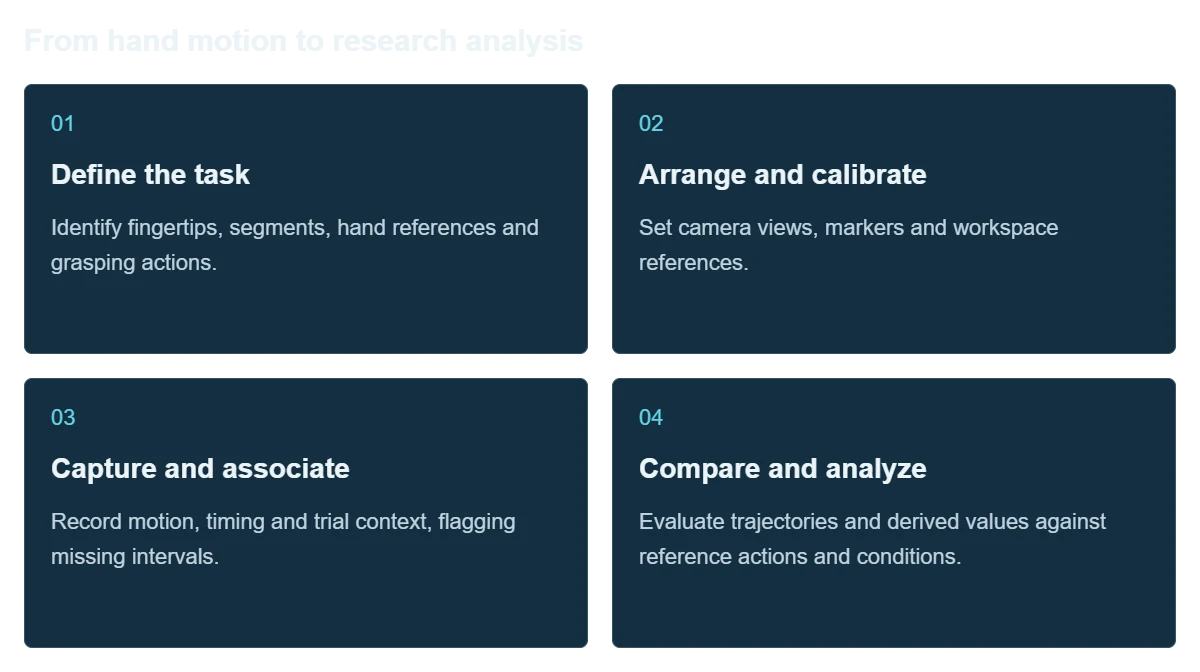
01Define each measured quantity
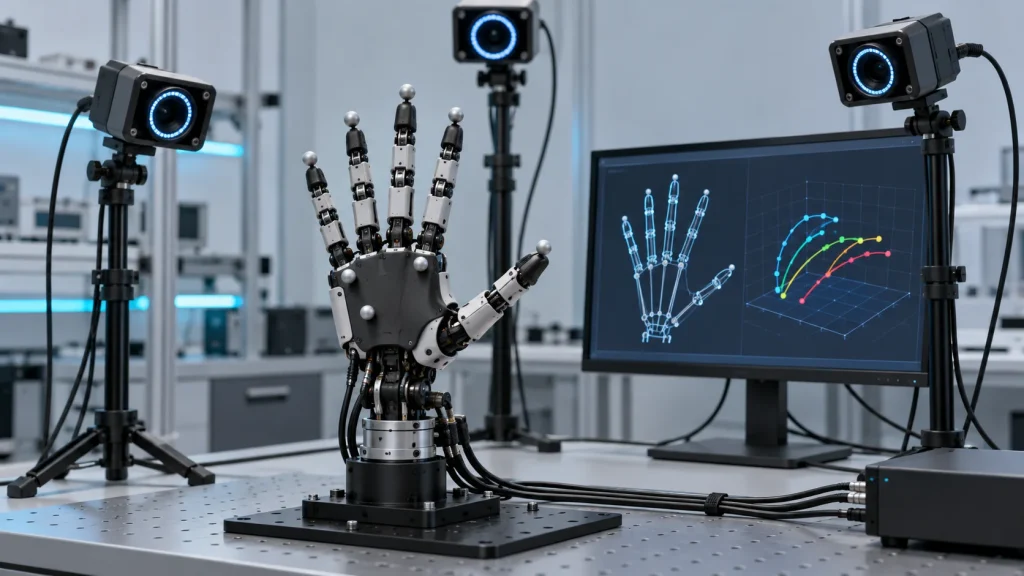
Separate fingertip, segment and hand-reference targets. Joint-angle analysis needs an appropriate geometric or kinematic model; observing a fingertip trajectory does not mean every joint angle has been directly measured.
02Design around small movements and occlusion
Place observation views around the grasping workspace and evaluate pinching, closing and object contact. Marker size, spacing and attachment must balance visibility with their effect on the action being studied.
03Record the experimental context
Keep target names, timestamps, trial identifiers, objects and task conditions together. When comparing motion with force, tactile or controller data, define how the different clocks and records will be aligned.
04Compare repeatable trials
Record trajectories, valid observations and exceptional intervals under consistent task conditions. Preserve the method used to derive velocity or angles so results remain interpretable and repeatable.