
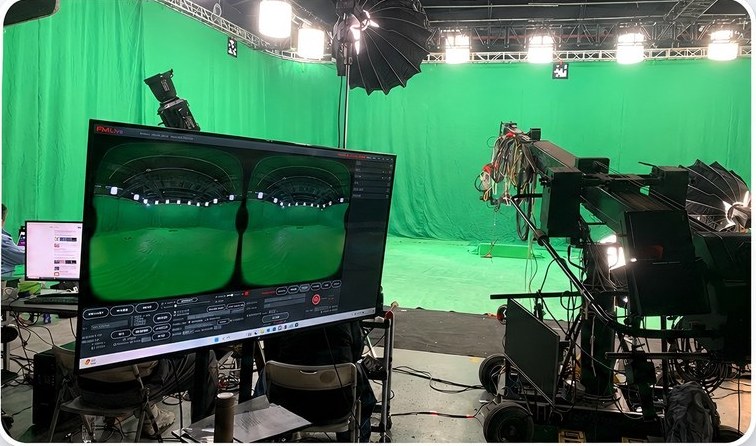
The VR Virtual Production System is intended for immersive content, virtual spaces, interactive experiences and teaching demonstrations. It is suitable for education, cultural and tourism projects, enterprise displays and virtual-content production teams. A typical solution includes a VR virtual space, real-time rendering, motion capture or spatial tracking, content production workstations and media asset storage, helping customers produce virtual content, preview interactions and build asset collections.
Suitable Customers
- VR Virtual Production System
- Broadcast production
- Education and practical training
- Enterprise content production
Customer Challenges
- Immersive content production requires a stable virtual space
- Interactive content requires real-time feedback and control
- Media and assets need centralized management
System Components
- VR virtual space
- Real-time rendering system
- Motion capture/spatial tracking
- Content production workstation
- Media asset storage
Workflow
- Virtual-space setup
- Motion or device tracking
- Real-time interactive preview
- Content recording and output
- Asset archiving
Recommended Products
- LeTracker Motion Capture System
- Follower Optical Spatial Tracking System
- Render Virtual Production Server
Specifications
| System overview | VR virtual space |
|---|---|
| System overview | Real-time rendering system |
| System overview | Motion capture/spatial tracking |
| System overview | Content production workstation |
| System overview | Media asset storage |
Frequently asked questions
Who is VR Virtual Production System suitable for?
It is suitable for broadcast, film and television production, education and practical training, branded livestreaming or enterprise media teams that need VR Virtual Production System capabilities.
What information should be provided before deployment?
Please provide the site dimensions, number of cameras, LED or green-screen environment, rendering engine, media formats, number of workstations and delivery objectives.
Can the system be built in phases?
Yes. Core tracking, rendering or storage capabilities can be established first, followed by media asset management, automated analysis and additional workstations.