Robotics Motion Measurement

Dexterous Hand Motion Capture and Measurement

Capture hand motion as reviewable experimental data.

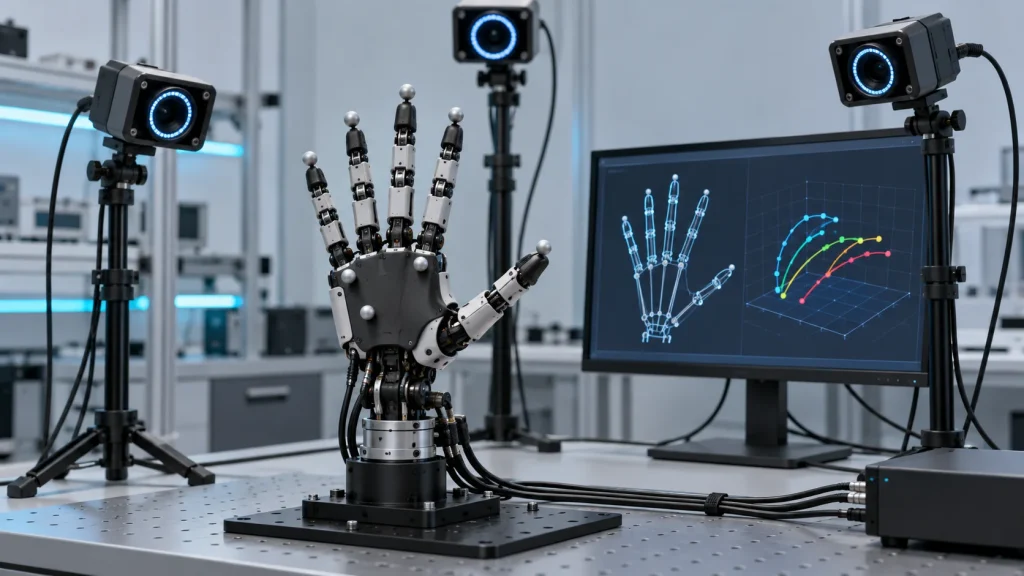
Lecen’s dexterous-hand measurement solution plans optical observation around fingertips, finger segments and a hand reference frame. It links motion paths with experiment video and test conditions for hand development, demonstration capture and grasping studies.

Product brand: Lecen Technology

Dexterous Hand Motion Capture and Measurement functional architecture illustration
Solution architecture illustration
Working scope
Fingertips / segments / hand
Approach
Markers + camera layout
Project focus
Motion-trial analysis

Project goals

Define the measured quantity before the camera layout

Hand movement combines global motion with multiple articulated joints. A target on the back of the hand cannot describe every finger. First define the quantity of interest—fingertip position, segment movement, overall hand pose or joint angles—then choose marker geometry, camera views, calibration and validation methods.

In focus

What the solution covers

Define each measured quantity

Separate fingertip, segment and hand-reference targets. Joint-angle analysis needs an appropriate geometric or kinematic model; observing a fingertip trajectory does not mean every joint angle has been directly measured.

Design around small movements and occlusion

Place observation views around the grasping workspace and evaluate pinching, closing and object contact. Marker size, spacing and attachment must balance visibility with their effect on the action being studied.

Record the experimental context

Keep target names, timestamps, trial identifiers, objects and task conditions together. When comparing motion with force, tactile or controller data, define how the different clocks and records will be aligned.

Compare repeatable trials

Record trajectories, valid observations and exceptional intervals under consistent task conditions. Preserve the method used to derive velocity or angles so results remain interpretable and repeatable.

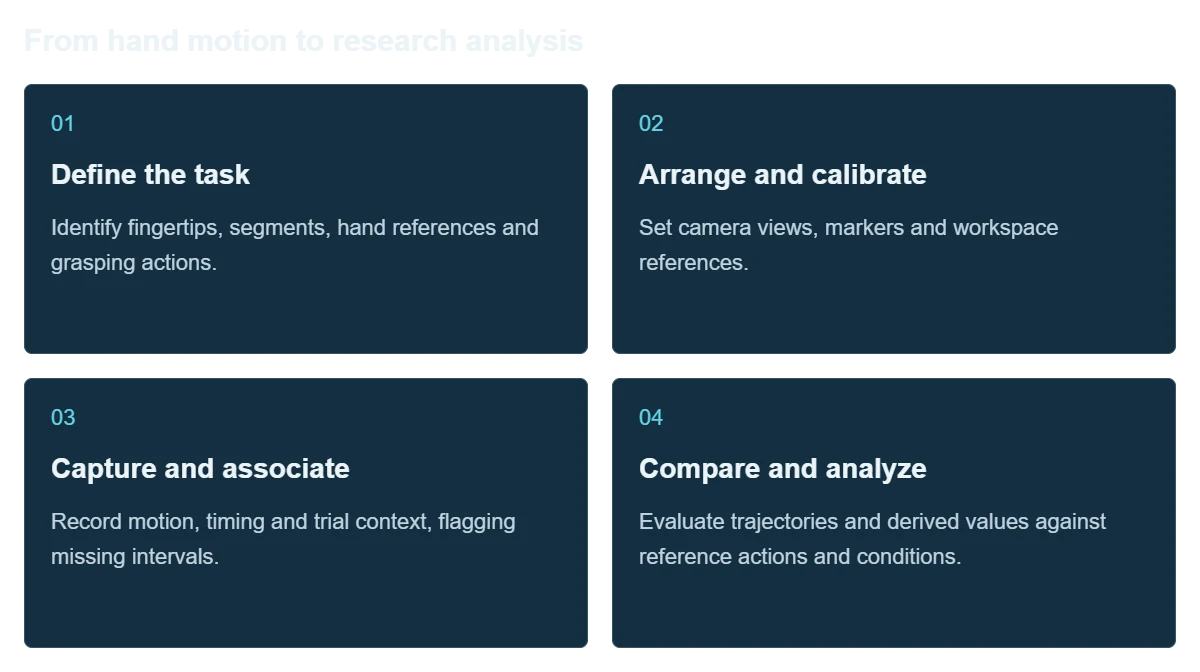
Workflow

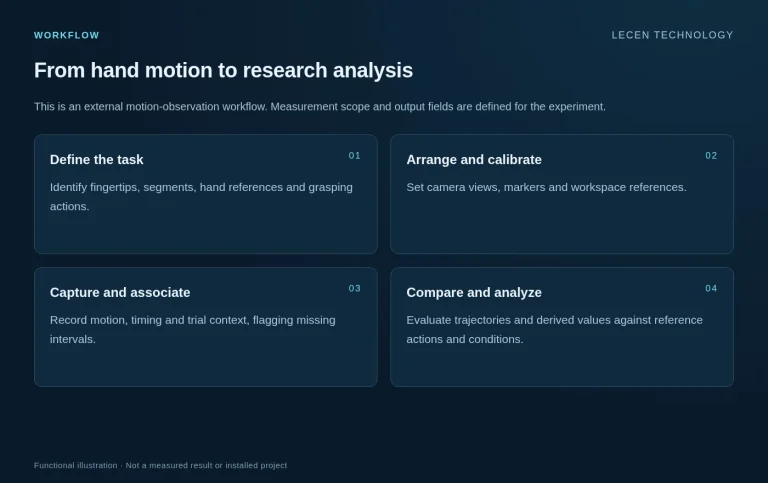
From hand motion to research analysis

This is an external motion-observation workflow. Measurement scope and output fields are defined for the experiment.

  1. Define the task

    Identify fingertips, segments, hand references and grasping actions.

  2. Arrange and calibrate

    Set camera views, markers and workspace references.

  3. Capture and associate

    Record motion, timing and trial context, flagging missing intervals.

  4. Compare and analyze

    Evaluate trajectories and derived values against reference actions and conditions.

Integration

Begin with a representative feasibility trial

Establish observability for the real motions and grasped objects before extending the joint count or workspace.

Dexterous Hand Motion Capture and Measurement workflow illustration
Workflow illustration

Specify quantities

Define positions or angles, target count, speed, volume and error requirements.

Design views and targets

Check visibility during pinching, contact and crossing fingers.

Set coordinates and models

Define origin, units, hand reference and any angle-computation model.

Validate repeated trials

Review missing data, associations, timing and processing; document the experiment.

Configuration

Architecture and planning inputs

Dexterous Hand Motion Capture and Measurement — Architecture and planning inputs
TargetsIndividually defined fingertips, segments or hand-reference targets
Output planPosition trajectories; pose and angles depend on geometry and models
Capture planObservation cameras, markers, calibration tools and recording workstation
TimingCapture timestamps and alignment with external experimental records
Error evaluationTest under stated volume, speed, lighting and target configuration
RecordsTrials, trajectories, validity flags, analysis methods and visualization

Applications

Where it fits

Mechanism evaluation

Compare motion range and trajectories across finger designs and grasp actions.

Demonstration and reproduction research

Align demonstrated motion with robot execution in coordinates and time.

Grasp-strategy experiments

Observe changes before and after contact across objects and task conditions.

Application and workflow visuals

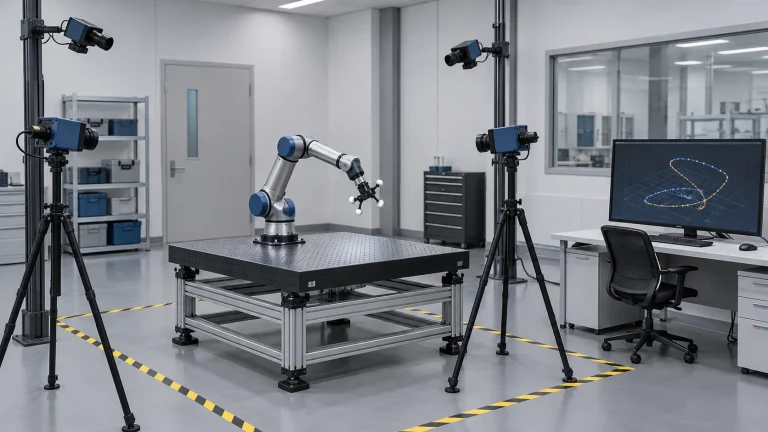
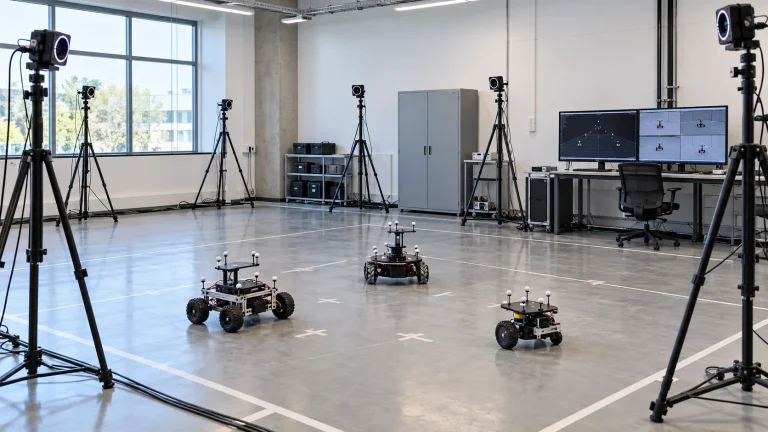
Dexterous hand and optical motion capture application concept
Dexterous hand and optical motion capture application concept; illustrates the application context.AI-generated concept, not a product test, software screenshot or customer project.

FAQ

Common questions

Can a single target on the hand describe every finger?

No. Overall hand pose and finger articulation are different observations. Define targets and capture methods for the required fingertips or segments.

Can joint angles be read directly from fingertip positions?

They generally require a geometric or kinematic model and sufficient observations. Some configurations are not uniquely observable; document assumptions and measured quantities.

Does filling a gap make it a measured sample?

No. Distinguish missing observations, interpolation and model estimates, and retain validity flags.

Does optical motion capture also measure contact force?

Motion is not force or touch. Additional sensors and timestamp alignment are needed for combined analysis.

How are accuracy and sample rate selected?

Start with target size, speed, volume and error requirements. Select equipment and validate representative trials rather than relying on one advertised figure.

Project brief

Start with a project brief

Experiment

Hand geometry, dimensions, target quantities and grasped objects.

Measurement

Data types, movement speed, working volume and error objectives.

Combined records

Video, force/tactile sensors or controller logs and timing requirements.

Talk to Lecen

Let’s scope your project

Define targets, working volume, movement speeds and required outputs to discuss observation methods and validation.

Discuss the measurement task